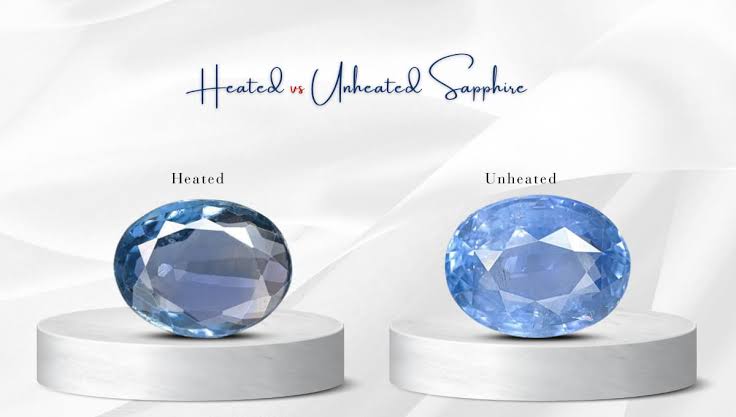
Heat treatment is one of the oldest and most widely accepted practices in the colored gemstone trade. Controlled heating can improve a stone's color and clarity by dissolving certain inclusions or altering trace elements — and it has been used on sapphires and rubies for centuries, long before modern gemology could even explain why it worked.
The key word is "accepted." Reputable dealers disclose heat treatment because it's considered a normal, stable, and permanent enhancement — it doesn't need to be redone, and it doesn't make a stone less "real." The vast majority of sapphires and rubies sold worldwide today have been heat-treated.
Unheated stones are simply those that display fine color and clarity naturally, without any treatment at all. Because that combination is much rarer in nature, unheated stones of good quality typically command a significant price premium over comparable heated stones — sometimes several times the price for an equivalent size and color.
Neither option is objectively "better" for everyday purposes — a well-heated sapphire is just as hard, just as durable, and can look just as beautiful as an unheated one. The choice mostly comes down to rarity, certification, and personal preference rather than any practical difference in how the stone wears or lasts.
What actually matters most is disclosure. Always ask for a lab certificate that explicitly states the treatment status of a stone, whether that's "heated," "unheated," or a more specific treatment type. A stone's value is set fairly only when everyone — buyer and seller — is working from the same information.