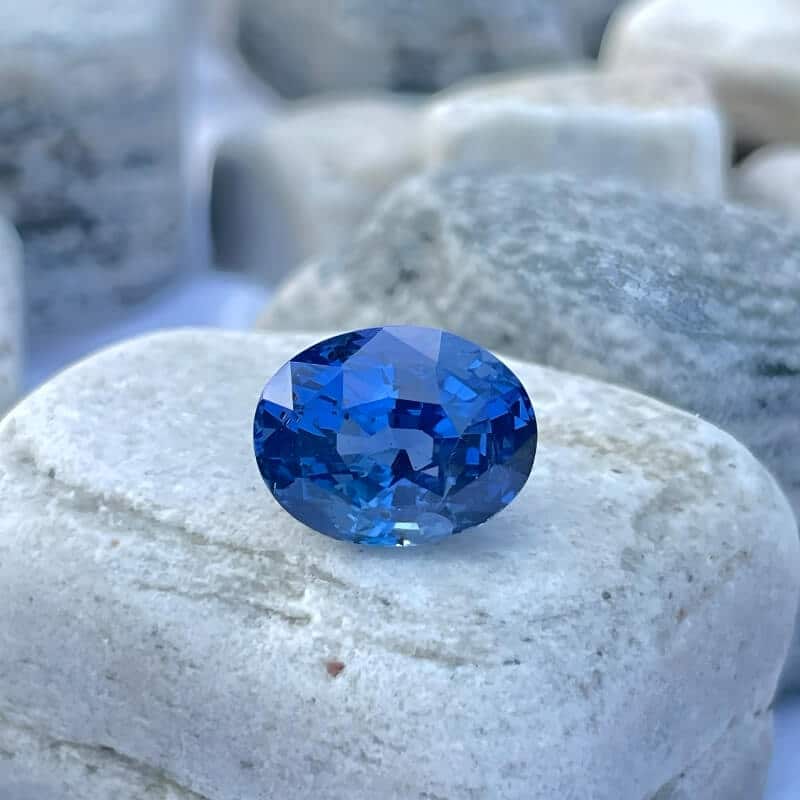
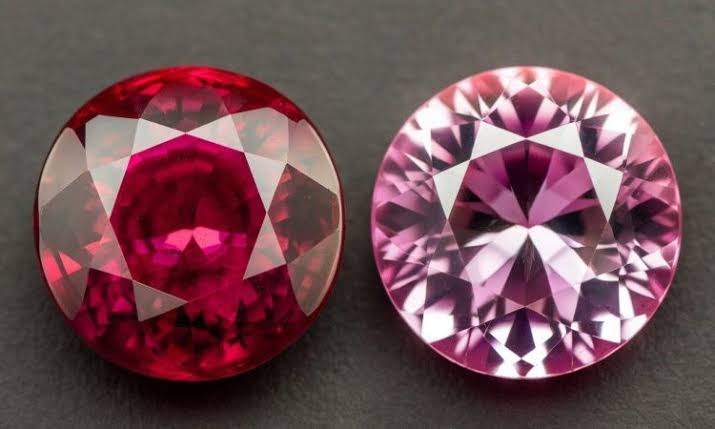
Here's the surprise for most first-time buyers: rubies and sapphires are the same mineral, corundum. The only real difference is trace elements. Corundum colored red by chromium is called ruby; corundum in every other color — blue, yellow, pink, green, colorless — is called sapphire. A blue sapphire and a red ruby could, in theory, come from the very same deposit.
Chromium is also what gives ruby its characteristic fluorescence — that faint inner glow you sometimes see in strong light — which blue sapphire, colored by iron and titanium instead, doesn't share in the same way.
In terms of hardness, they're identical: both rate 9 on the Mohs scale, just behind diamond, which makes either one an excellent choice for a ring or piece of jewelry worn daily.
Rarity and price don't follow a simple rule between the two. Fine rubies with strong "pigeon blood" red color are famously rare and often command higher prices per carat than sapphires of comparable size, while padparadscha sapphires — a rare pink-orange variety — can be just as coveted. In the end, the choice usually comes down to which color speaks to you, since both share the same durability and the same deep geological pedigree.